THE FOUNDING CIRCLE
Institutions Helping Establish the Future of Cultural Digital Infrastructure
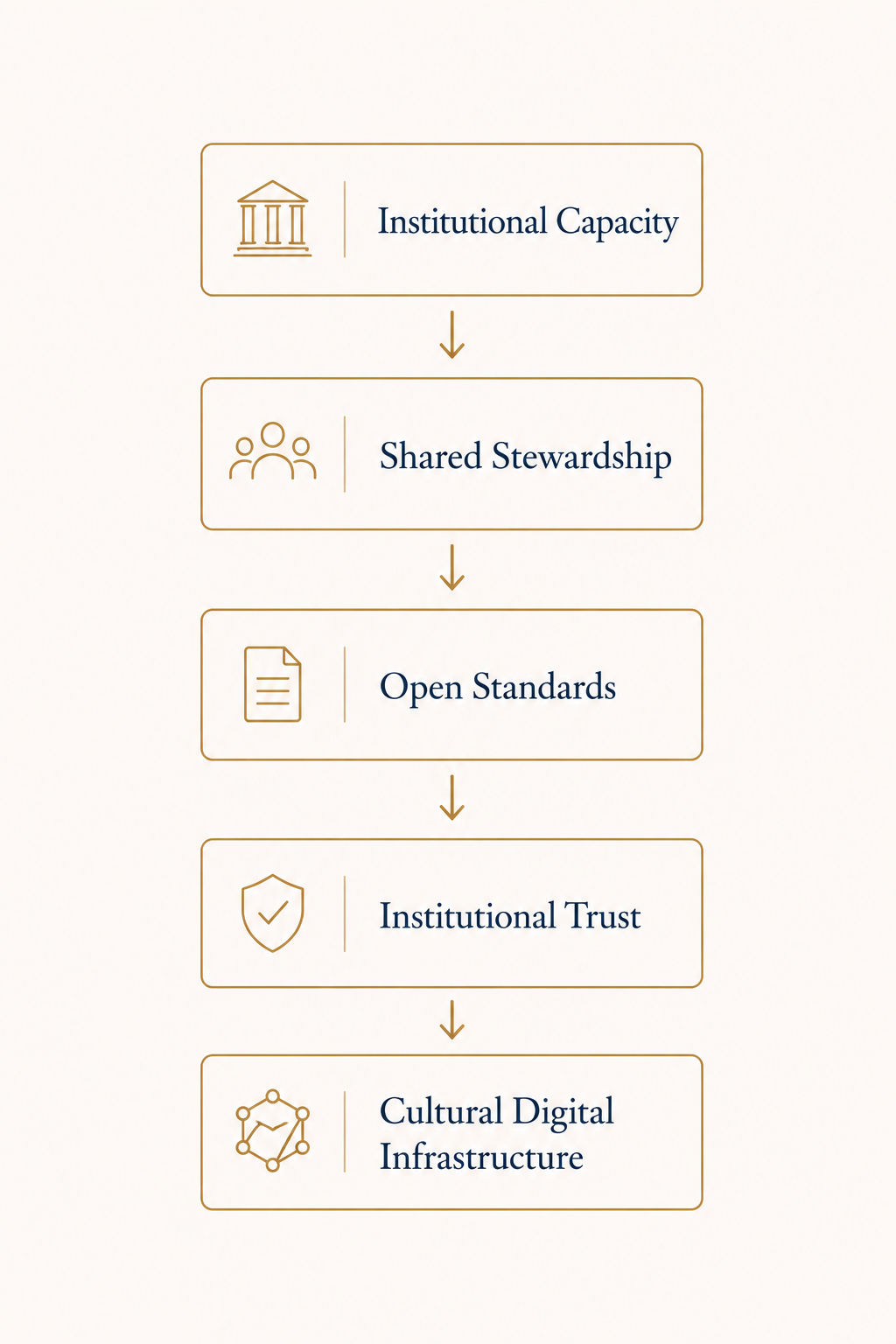
Its members provide the knowledge, institutional capacity, infrastructure, cultural perspective, and foundational resources required to develop an independent international system of open standards for Cultural Digital Infrastructure.


Institutions are remembered not only for what they preserve, but for what they help establish.
#purpose
1. Purpose of the Founding Circle
Establishing an Institution Together
The Founding Circle exists to bring together the first organizations willing to contribute to the establishment of the CDA Standards Organization.
Its purpose is not to create a conventional membership program.
It is to form an international community of institutional stewards whose complementary expertise can help establish:
- the organizational foundations of the CDA Standards Organization;
- the development and publication of the CDA Protocol;
- independent standards governance;
- international institutional dialogue;
- research and educational capacity;
- technological and cultural implementation pathways;
- long-term organizational continuity.
The Founding Circle therefore represents a foundational institutional structure rather than a sponsorship program.
The Founding Circle does not purchase influence over the standard.
It contributes capacity to the institution responsible for stewarding it.
2. Why a Founding Circle Exists
Open Standards Require an Institutional Foundation
Open standards do not emerge through research alone.
They require:
- legal and organizational structures;
- transparent governance;
- technical development;
- institutional review;
- international consultation;
- multilingual communication;
- educational programs;
- long-term stewardship.
The CDA Standards Organization is being established to provide this institutional foundation.
The Founding Circle enables a limited group of organizations to contribute during the stage when the Organization, its governance systems, and its first international standard are being formed.
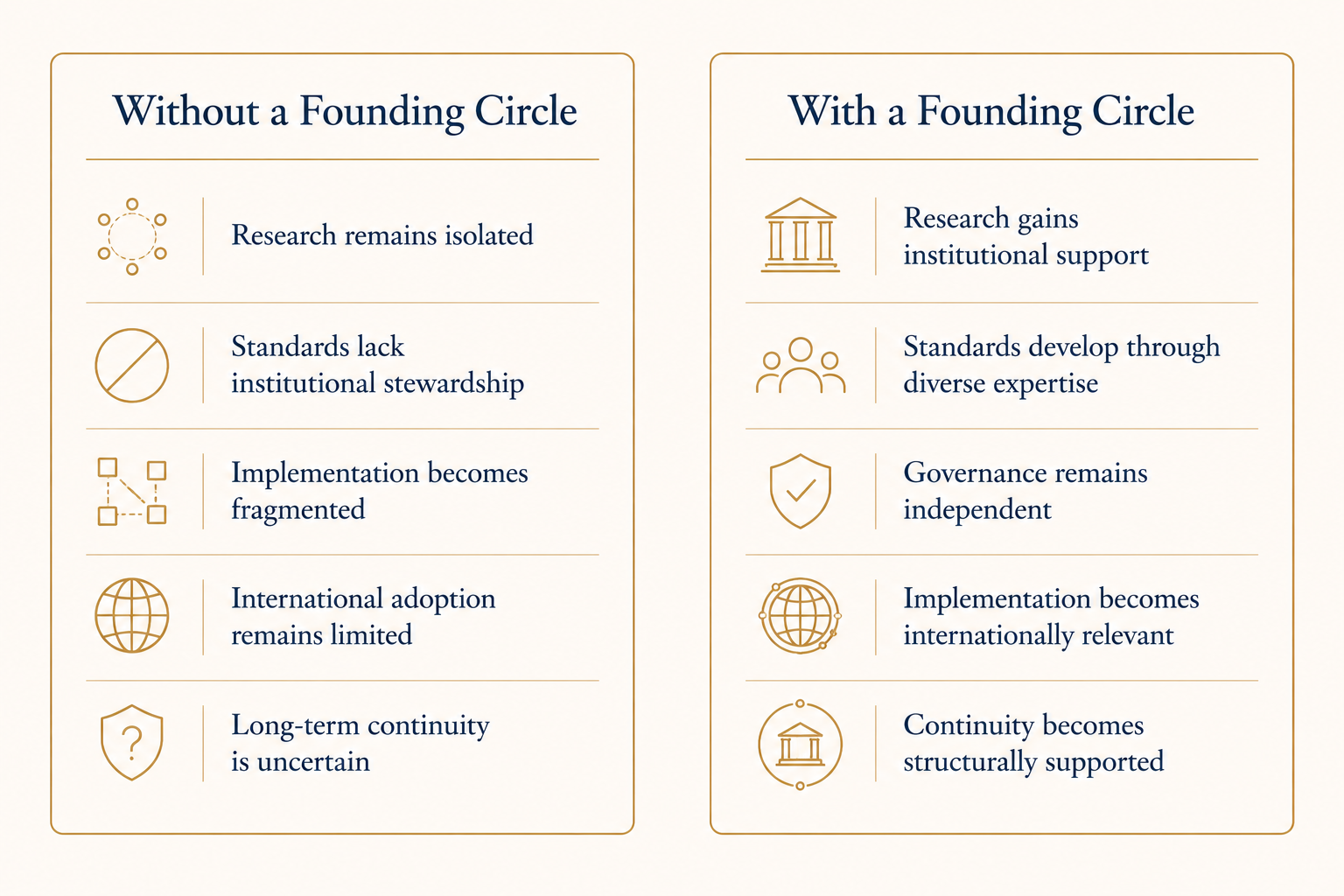
The purpose of the Founding Circle is not to centralize authority,
but to distribute responsibility across a trusted international community.
3. Five Categories of Founding Partners
Five Independent Forms of Institutional Contribution
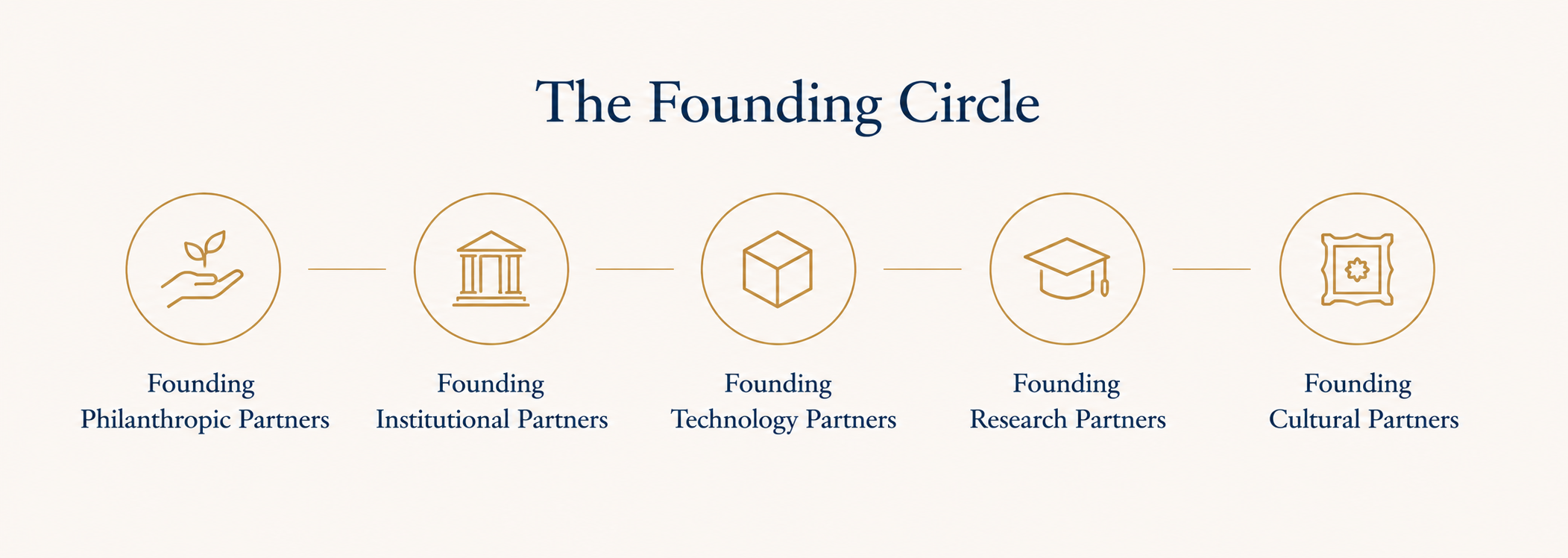
The Founding Circle consists of five independent groups.
They are not hierarchical levels.
Each group represents a distinct form of institutional capacity required to establish the CDA Standards Organization.
#1
Founding Philanthropic Partners
Foundational Capacity
Foundations, philanthropic institutions, family foundations, and public-interest funders supporting the establishment and long-term development of open cultural infrastructure.
Potential contributions include:
- foundational financing;
- institutional development;
- research support;
- education and public access;
- international convening;
- long-term cultural stewardship.
Institutional role examples
- Founding Cultural Infrastructure Partner
- Founding Public Interest Partner
- Founding International Philanthropic Partner
#2
Founding Institutional Partners
Cultural and Operational Capacity
Museums, archives, libraries, foundations, galleries, collecting institutions, and other organizations responsible for preserving, governing, or circulating cultural heritage.
Potential contributions include:
- institutional requirements;
- standards review;
- museum and archive expertise;
- pilot environments;
- collections and provenance knowledge;
- long-term preservation practices.
Institutional role examples
- Founding Museum & Collections Partner
- Founding Archive & Preservation Partner
- Founding Institutional Stewardship Partner
#3
Founding Technology Partners
Infrastructure and Implementation Capacity
Technology organizations, digital infrastructure providers, standards specialists, blockchain organizations, interoperability platforms, and preservation technology providers.
Potential contributions include:
- technical architecture;
- interoperability;
- infrastructure deployment;
- security and verification;
- digital preservation;
- implementation testing.
Institutional role examples
- Founding Technology & Infrastructure Partner
- Founding Interoperability Partner
- Founding Digital Preservation Partner
#4
Founding Research Partners
Knowledge and Methodological Capacity
Universities, research institutes, laboratories, academic networks, policy centers, and independent research organizations.
Potential contributions include:
- interdisciplinary research;
- standards methodology;
- peer review;
- comparative analysis;
- education and training;
- development of future research programs.
Institutional role examples
- Founding Research & Knowledge Partner
- Founding Education & Methodology Partner
- Founding Institutional Research Partner
#5
Founding Cultural Partners
Cultural Context and Community Capacity
Cultural organizations, artist-led initiatives, creative networks, public cultural programs, heritage communities, and organizations representing diverse cultural environments.
Potential contributions include:
- cultural context;
- community participation;
- artistic and creative perspectives;
- multilingual and regional knowledge;
- inclusive implementation;
- international cultural dialogue.
Institutional role examples
- Founding Cultural Participation Partner
- Founding Creative Communities Partner
- Founding International Cultural Dialogue Partner
The strength of the Founding Circle emerges from the complementarity of its members—not from the dominance of any single category.
4. Globally Balanced Founding Circle
Building an International Institution from the Beginning
The CDA Standards Organization is intended to serve an international cultural ecosystem.
The Founding Circle must therefore reflect a meaningful diversity of:
- regions;
- cultural traditions;
- institutional models;
- technological environments;
- legal contexts;
- research perspectives.
The objective is not numerical representation alone.
It is to ensure that the development of open standards does not become structurally dependent upon one country, one technological ecosystem, or one institutional tradition.
Geographic Diversity
+
Institutional Diversity
+
Disciplinary Diversity
+
Cultural Diversity
↓
International Legitimacy
A globally balanced Founding Circle helps ensure that the CDA Protocol is:
- internationally relevant;
- institutionally neutral;
- culturally responsive;
- technologically adaptable;
- capable of long-term global adoption.
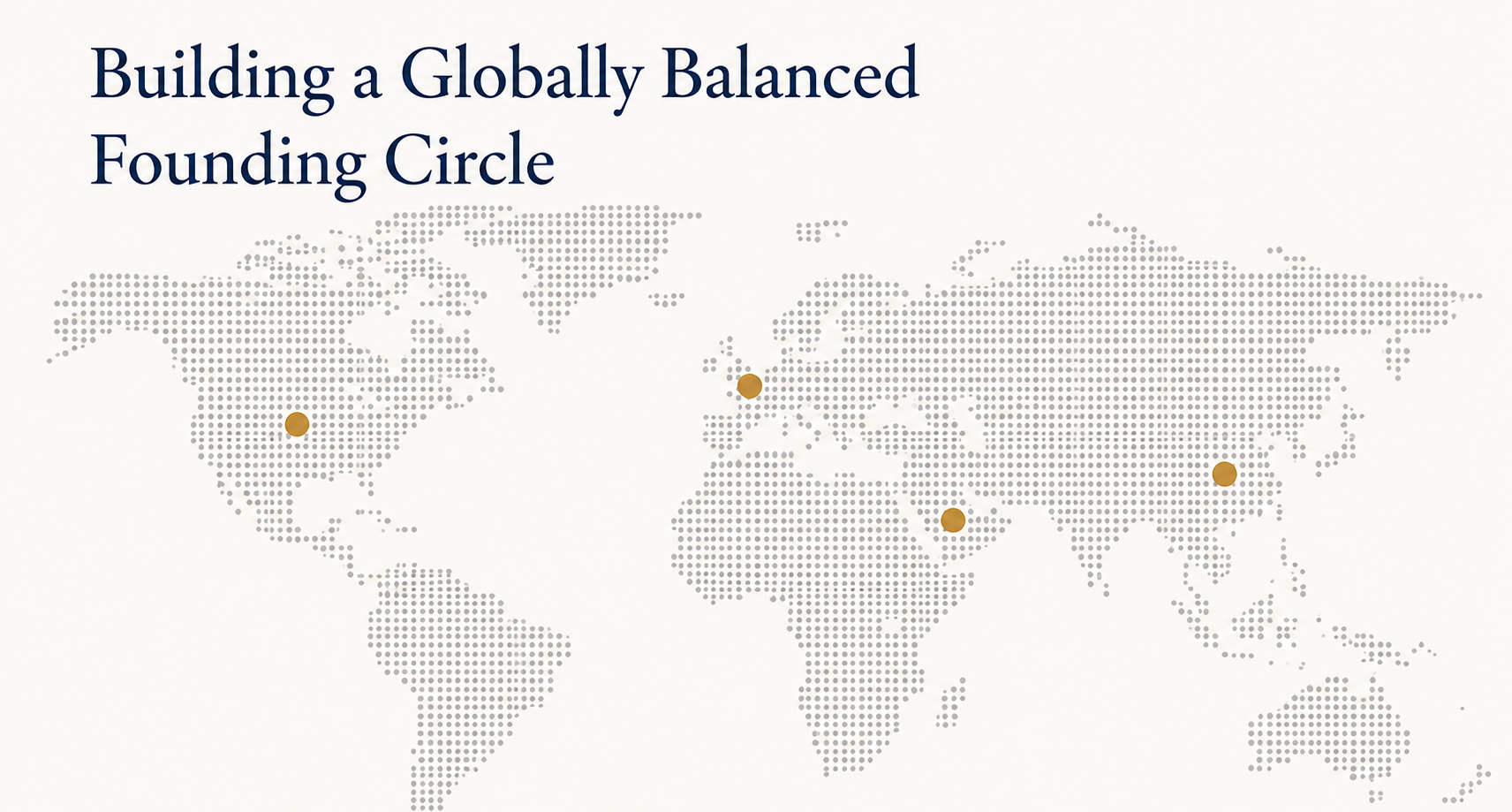
The composition of the Founding Circle will develop progressively.
Regional balance is treated as an institutional objective, not as a rigid quota.
5. Institutional Role of Founding Partners
Every Founding Partner Contributes a Distinct Capacity
Founding Partners do not receive identical institutional functions.
Each participating organization is invited because it possesses a particular combination of knowledge, infrastructure, networks, experience, or cultural responsibility.
Every partnership is therefore defined through an individualized:
Institutional Role within the Founding Circle
Examples include:
- Founding Research & Cultural Stewardship Partner;
- Founding Technology & Infrastructure Partner;
- Founding Museum & Collections Partner;
- Founding Education & Knowledge Partner;
- Founding Legal & Governance Partner;
- Founding International Cooperation Partner;
- Founding Digital Preservation Partner.
The Institutional Role is descriptive rather than hierarchical.
It identifies the area in which an organization can make its most meaningful contribution.
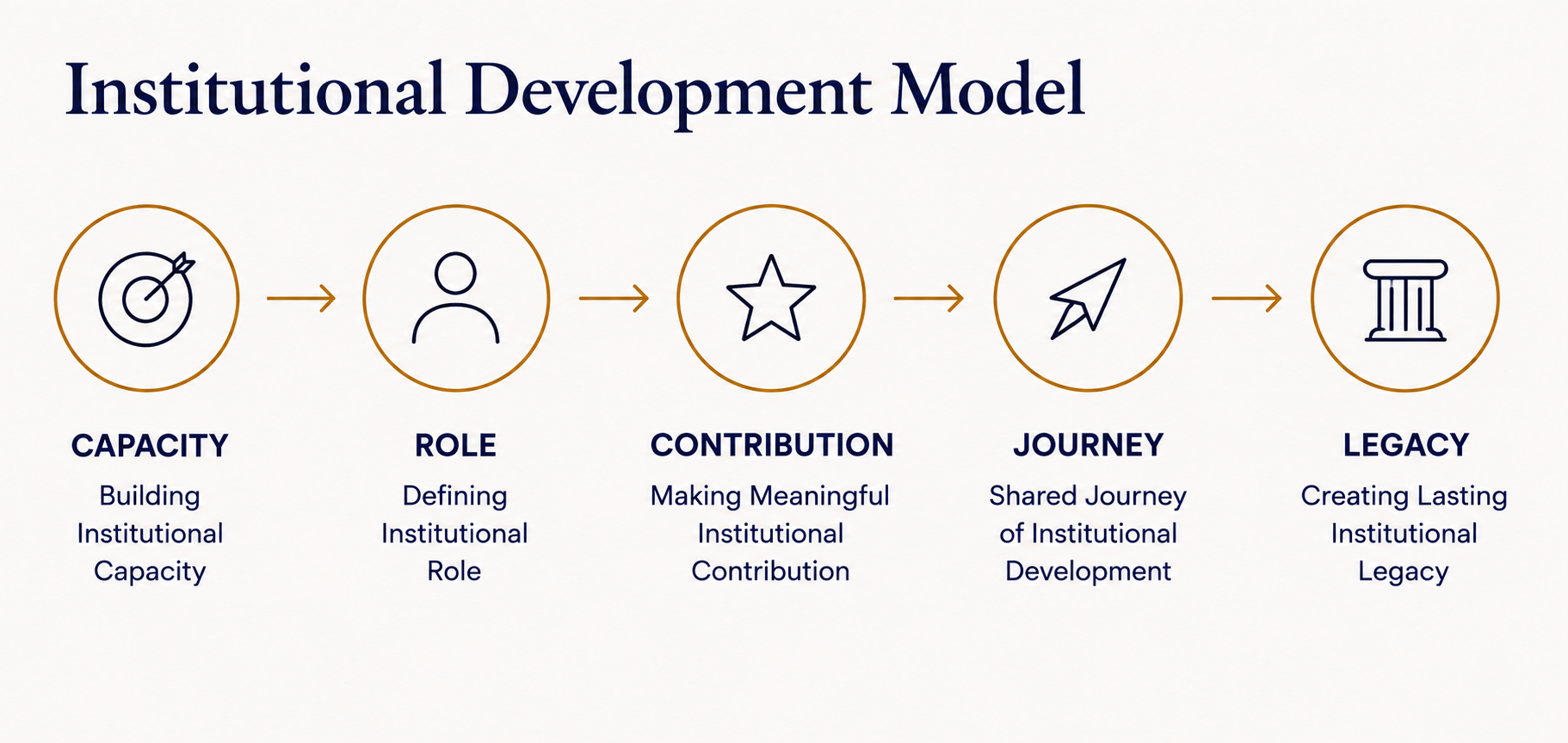
Institutional participation begins with existing capacity.
That capacity is translated into a defined role, expressed through concrete contribution, developed through a long-term institutional journey, and ultimately preserved as part of the historical legacy of the Organization.
Greater financial commitment does not create greater authority over the standard.
Institutional influence is exercised through expertise, transparent procedures, and responsible participation.
6. Rights and Responsibilities
Shared Participation. Independent Governance.
Every Founding Partner participates in the institutional life of the CDA Standards Organization while respecting its independence and public-interest mandate.
Rights of Founding Partners
Founding Partners may:
- be permanently recognized within the Founding Circle Registry;
- appoint an institutional representative;
- participate in institutional consultations;
- nominate qualified experts for Working Groups;
- review relevant draft standards;
- contribute to public consultations;
- propose research and implementation initiatives;
- participate in educational and international programs;
- contribute institutional case studies;
- receive institutional briefings and development reports.
Responsibilities of Founding Partners
Founding Partners are expected to:
- support the mission and founding principles of the Organization;
- preserve the independence and neutrality of standards development;
- nominate appropriately qualified representatives;
- contribute expertise or institutional capacity in agreed areas;
- disclose relevant conflicts of interest;
- respect confidentiality where applicable;
- participate responsibly in consultations and Working Groups;
- avoid presenting participation as ownership or control of the CDA Protocol.
What participation does not provide
Founding Partnership does not:
- confer ownership of the CDA Protocol;
- provide unilateral decision-making authority;
- guarantee adoption of proposals submitted by a partner;
- establish commercial exclusivity;
- provide preferential access to implementations;
- permit influence to be purchased through financial contribution.
Participation creates responsibility.
Governance protects independence.
7. Founding Partnership Process
From Institutional Dialogue to Shared Stewardship
The Founding Partnership process is based on mutual alignment rather than open commercial enrollment.
Organizations may be invited by the CDA Standards Organization or may express an interest in participation.
Step 1
Expression of Interest
An institution expresses interest or responds to an invitation.
No obligation is created at this stage.
Step 2
Institutional Dialogue
The parties discuss mission alignment, institutional capacity, potential role, and possible areas of contribution.
Step 3
Strategic Alignment
The CDA Standards Organization determines whether the proposed relationship supports the independence, diversity, and long-term needs of the Founding Circle.
Step 4
Individual Partnership Proposal
A confidential proposal is prepared for the institution, including:
- recommended participation category;
- Institutional Role within the Founding Circle;
- Institutional Capacity Profile;
- proposed areas of contribution;
- financial and non-financial commitments;
- partnership roadmap.
Step 5
Founding Partnership Agreement
The mutual commitments, administrative terms, recognition, and participation conditions are formally documented.
Step 6
Admission to the Founding Circle
The organization is entered into the Founding Circle Registry and begins its institutional participation.
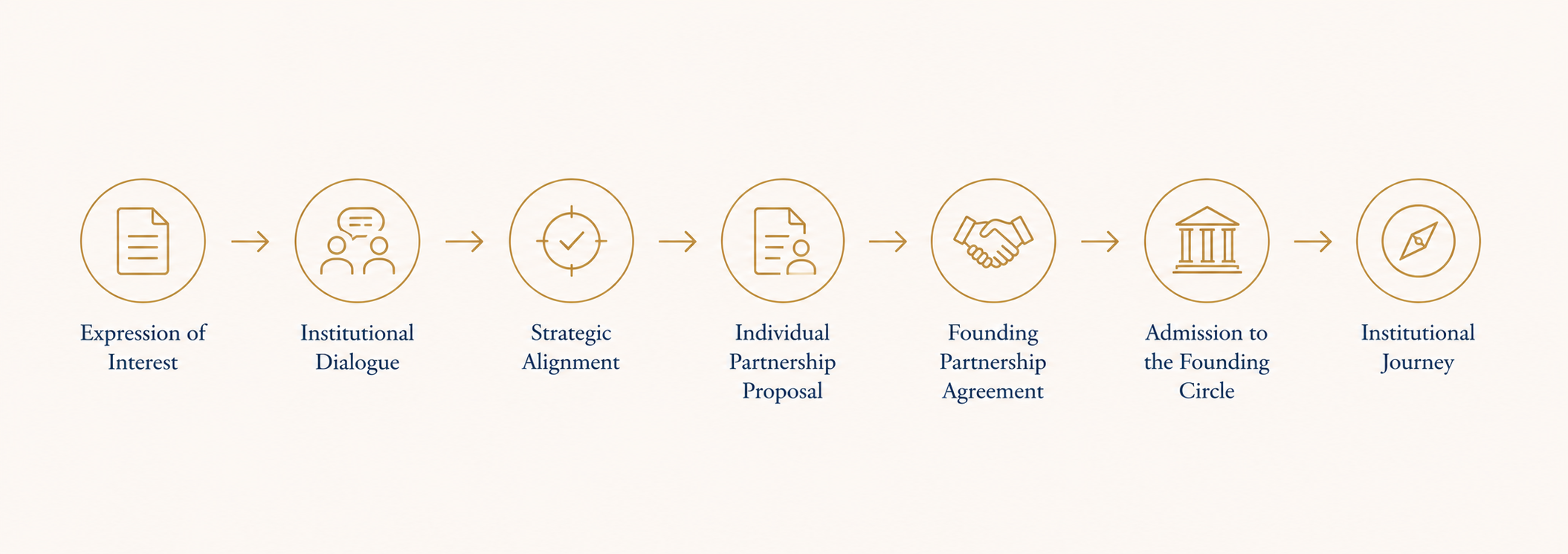
Admission is not the conclusion of the process.
It is the beginning of an institutional journey.
8. Invitation to Participate
Help Establish an Institution Intended to Serve Future Generations
The CDA Standards Organization is currently entering its foundational stage.
We are inviting a limited number of philanthropic, institutional, technological, research, and cultural organizations to explore participation in the Founding Circle.
The invitation is addressed to organizations that recognize the need for:
- open cultural standards;
- independent institutional stewardship;
- international interoperability;
- long-term preservation;
- transparent governance;
- shared cultural infrastructure.
We respectfully invite your institution to explore a role within the Founding Circle of the CDA Standards Organization.
Together, Founding Partners do not simply support an organization.
They help establish an institution intended to serve the future development of Cultural Digital Infrastructure.

9. Download Executive Brief
A Concise Introduction to the Organization
The Executive Brief introduces:
- the current challenge;
- the opportunity for shared cultural infrastructure;
- the Dual Institution Model;
- institutional independence;
- the Founding Circle;
- the first twenty-four months;
- the invitation to participate.
- CDA Standards Organization
- Executive Brief
Version 1.0

10. Contact the Secretariat
Begin an Institutional Conversation
For inquiries concerning the Founding Circle, institutional participation, research collaboration, technology partnerships, or cultural cooperation, please contact the Secretariat.
Direct contact mail@cdastandard.org
Every enduring international institution begins with a small number of organizations willing to establish a shared foundation.